What Makes a Snack More Satisfying
Understanding satiety—the feeling of fullness and satisfaction after eating—is central to understanding why certain snacks keep you satisfied longer than others. This article explores the science behind satiety and the food components that create this sensation.
The Biology of Satiety
Satiety is controlled by multiple mechanisms in the body. When you eat, hormones like leptin, peptide YY, and cholecystokinin are released, signaling fullness to your brain. The speed and strength of these signals depend on what you eat.
Food volume, texture, temperature, and nutrient composition all influence satiety. This means two snacks with the same calorie content can feel completely different in terms of satisfaction.
Key Factors That Increase Satiety
Protein: Protein is the most satiating macronutrient. It's digested slowly, triggers stronger satiety hormone release, and has a higher thermic effect (requires more energy to digest). A snack combining protein—like almonds, yogurt, or cheese—creates stronger fullness signals than simple carbohydrates.
Fiber: Dietary fiber, especially soluble fiber, slows gastric emptying (how quickly food leaves your stomach). This prolonged stomach presence extends satiety. Whole grains, fruits, vegetables, and legumes are fiber-rich choices.
Volume and Water Content: Foods with high water and air content take up more space in your stomach, triggering fullness signals. A large bowl of berries creates more satiety than a small chocolate bar, despite similar calories.
Whole Foods vs Processed: Whole foods require more chewing and have more fiber, generally creating stronger satiety signals. Processed foods are often engineered for rapid consumption, bypassing normal fullness cues.
Fat Content (Healthy Fats): While calorie-dense, fats slow digestion and promote the release of satiety hormones. Nuts and seeds, despite high calories, often create strong satisfaction.
Satisfying Snack Combinations
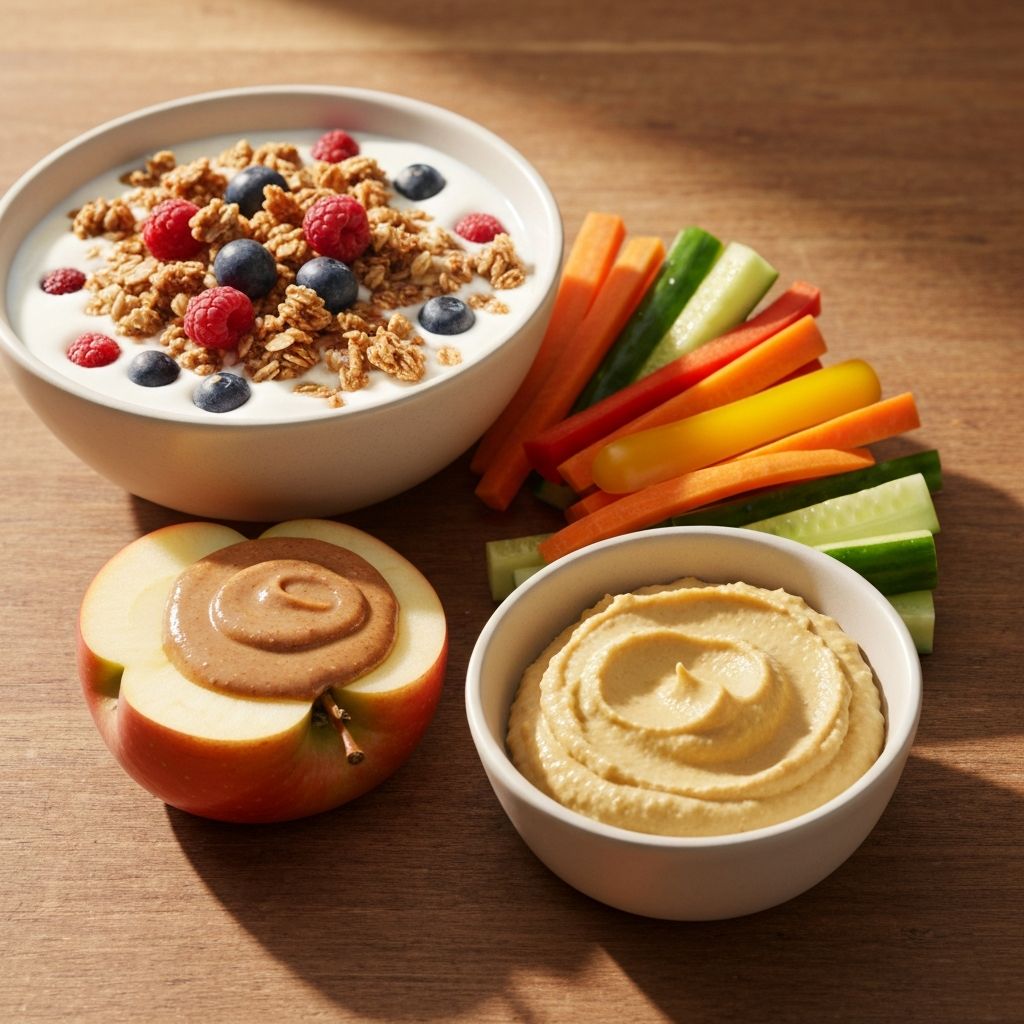
The most satisfying snacks combine multiple satiety factors. For example:
- Apple + Almond Butter: Volume, fiber, and protein combine for lasting satiety
- Greek Yogurt + Berries: Protein, fiber, and volume create strong fullness signals
- Mixed Nuts + Dried Fruit: Healthy fats, fiber, and chewing requirement promote satisfaction
- Vegetable Sticks + Hummus: Volume, fiber, and plant-based protein combine effectively