Simple vs Processed Bites Comparison
Understanding the nutritional differences between whole foods and ultra-processed alternatives provides valuable context for everyday food choices. This article compares these options across multiple dimensions.
Defining Simple and Processed Foods
Simple Whole Foods: Minimally processed foods close to their natural state—fresh fruit, raw vegetables, nuts, legumes, yogurt, and whole grains.
Ultra-Processed Foods: Manufactured products containing multiple added ingredients including refined carbohydrates, added sugars, added fats, emulsifiers, and preservatives.
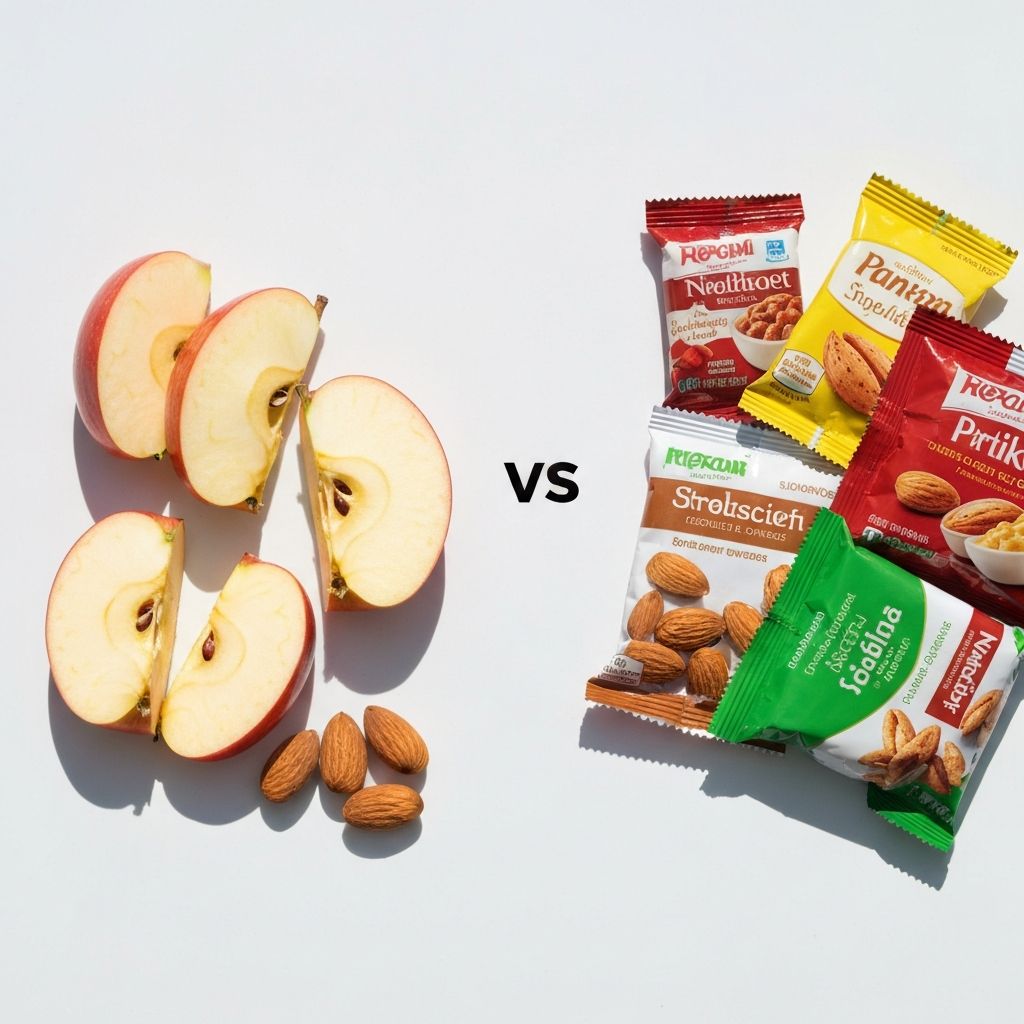
Nutritional Comparison: Specific Examples
Apple (100g) vs Chocolate Bar (50g, same calories):
- Apple: 52 calories, 0g added sugar, 2.4g fiber, multiple vitamins and minerals
- Chocolate bar: 52 calories, 8g added sugar, minimal fiber, primarily refined carbohydrates and added fats
Greek Yogurt with Berries (150g) vs Flavored Yogurt Drink (200ml):
- Greek yogurt: 100 calories, 17g protein, 10g natural sugar from berries, probiotics
- Yogurt drink: 100 calories, 1g protein, 15g added sugar, minimal beneficial components
Vegetable Sticks with Hummus (100g) vs Potato Chips (30g):
- Veggies + hummus: 80 calories, 3g protein, 4g fiber, vitamins, minerals
- Chips: 150 calories, 1g protein, minimal fiber, primarily refined carbohydrates and added fats
Key Nutritional Differences
Fiber Content: Whole foods retain fiber; processed foods have most fiber removed. Fiber affects satiety, blood sugar stability, and digestive health.
Added Sugars: Simple foods contain naturally occurring sugars; processed foods contain added sugars engineered to maximize palatability.
Micronutrients: Whole foods retain vitamins and minerals; processing often removes these components.
Food Engineered Properties: Processed foods are engineered for rapid consumption, bypassing normal fullness cues, while whole foods require more chewing and create stronger satiety.
Additives: Ultra-processed foods contain additives for shelf-life, texture, and taste; whole foods are primarily just the food itself.
Practical Takeaway
Understanding these differences doesn't make one "good" and one "bad"—rather, it provides information for everyday decision-making. Whole foods typically provide more nutritional value, create stronger satiety, and support more stable energy patterns compared to ultra-processed alternatives.