Fibre and Protein in Everyday Choices
Fiber and protein are two of the most important macronutrients for satiety and sustained energy. Understanding their roles and food sources helps explain why certain snacks create longer-lasting fullness.
The Role of Fiber
Fiber is a carbohydrate your body cannot digest. Rather than providing immediate energy, it passes through your digestive system largely unchanged, affecting digestion and satiety.
Effects of Fiber: Slows stomach emptying, creating prolonged fullness; feeds beneficial gut bacteria; supports healthy blood sugar patterns; supports digestive health.
The Role of Protein
Protein is broken down into amino acids, which your body uses for countless functions. Beyond its nutritional role, protein is particularly relevant to satiety.
Why Protein Increases Satiety: Takes longer to digest than carbohydrates, triggering satiety hormone release (particularly peptide YY), has higher thermic effect (requires more energy to digest), supports muscle maintenance.
Excellent Sources of Fiber
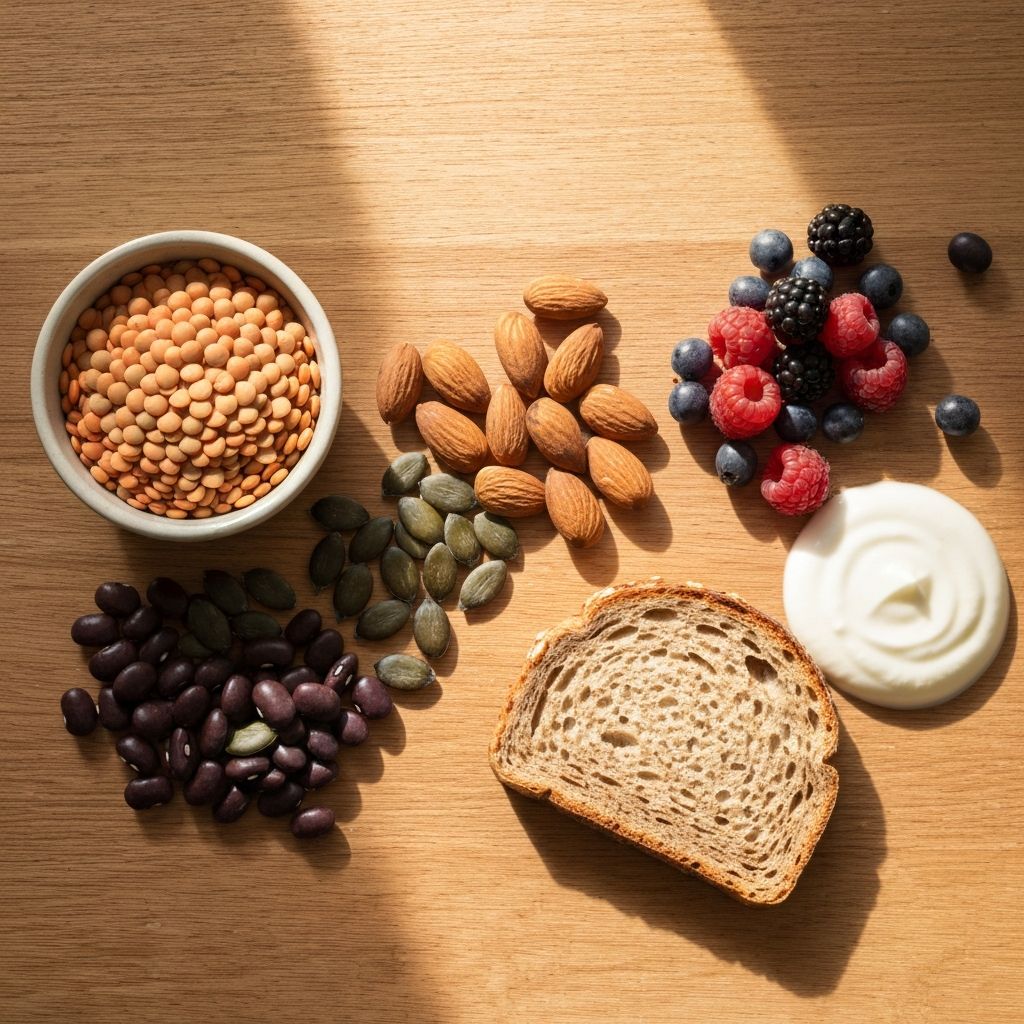
Whole Fruits: Berries, apples, pears, bananas—fiber content ranges from 2-8g per serving
Vegetables: Broccoli, carrots, Brussels sprouts, leafy greens—provide 2-4g fiber per serving
Whole Grains: Oats, brown rice, whole wheat—provide 3-4g fiber per serving
Legumes: Lentils, chickpeas, beans—provide 6-8g fiber per serving
Nuts and Seeds: Almonds, pumpkin seeds—provide 2-4g fiber per ounce
Excellent Sources of Protein
Dairy Products: Greek yogurt (17g per 150g), cheese (7g per ounce), milk
Nuts and Seeds: Almonds (6g per ounce), pumpkin seeds (9g per quarter cup)
Legumes: Lentils (18g per cooked cup), chickpeas (15g per cooked cup)
Eggs: 6g per large egg
Whole Grains: Oats (5g per half-cup), whole wheat bread (4g per slice)
Optimizing Snack Combinations
The most satisfying snacks combine both fiber and protein sources. Examples:
- Apple + Almonds: 5g fiber (apple) + 6g protein (almonds) = strong satiety
- Greek Yogurt + Berries: 17g protein (yogurt) + 4g fiber (berries) = sustained fullness
- Hummus + Vegetables: 3g protein + 5g fiber per serving = excellent volume and satiety
- Whole Grain Crackers + Cheese: 2g fiber (crackers) + 7g protein (cheese) = balanced satisfaction